If your feeds feel louder, faster, and more chaotic than ever, you’re not imagining it. This week we’re unpacking what’s actually moving the needle—from social’s sneaky impact on search to why sound, video, and even process deserve a more consequential seat at the table.
Let’s dive in.
👍 Why Social is Driving Branded Search
Social doesn’t just drive likes and shares—it quietly nudges people toward the search bar. The “social-to-search halo effect” is showing how great social content sparks curiosity that turns into branded search demand. The catch? Most SEO teams aren’t measuring it, which means a big chunk of intent is flying under the radar. While this is most true for organic search, there are lessons for paid efforts as well.
Here’s what’s going on:
- Social fuels branded search. Viral Reels, standout LinkedIn posts, and influencer mentions often lead to spikes in brand-name searches—even without links or clicks.
- Branded search = trust and demand. People don’t search for brands, products, or founders unless something meaningful already caught their attention.
- SEO reporting misses the story. Without tying social moments to branded search lifts, teams lose insight, attribution leverage, and momentum.
- The halo effect is measurable. Using baselines in GSC, Google Trends, and social listening data makes correlation visible and actionable.
- Alignment beats attribution. The real win is syncing social, search, and site experience to meet curiosity when it peaks.
Next steps for marketers:
- Establish a branded search baseline so you can spot meaningful lifts fast.
- Annotate SEO data with social moments to turn metrics into a narrative.
- Prep branded SERPs and landing pages ahead of big social pushes.
Bottom line: social and search aren’t separate lanes anymore. The brands that win will trace the ripple—and be ready to capitalize when curiosity turns into intent.
🔗See more at Search Engine Land
🎧 How to Keep Your Brand Sounding Fresh
In a world of endless scrolls, instant skips, and AI-generated everything, sounding “fresh” in 2026 is less about being louder—and more about being smarter, braver, and more human. A roundtable of top music and sound creatives all agree on one thing: sound isn’t a finishing touch anymore. It’s a strategic brand asset that can (and should) do real work.
Key takeaways:
- Human beats perfect. Handmade, raw, and imperfect sounds stand out as AI-generated audio becomes the norm.
- Design sound early. When audio is baked in from the start—not slapped on at the end—it shapes emotional impact.
- Ditch the sonic sameness. Formulaic mnemonics and “proprietary processes” are blending brands into beige noise.
- Think toolkits, not jingles. Flexible sonic systems adapt across formats, moments, and markets without losing identity.
- Embrace silence and restraint. Sometimes the most memorable move is a pause, not a punch.
- Consistency still matters. Sonic guidelines deserve the same rigor as visual brand standards.
Sound is no longer a nice-to-have—it’s a differentiator hiding in plain (audible) sight. Brands that treat audio with intention, curiosity, and courage won’t just be heard in 2026—they’ll be remembered.
🔗Read more from the experts at LBB Online
🎥 Instagram Spend Is Going All-In on Video
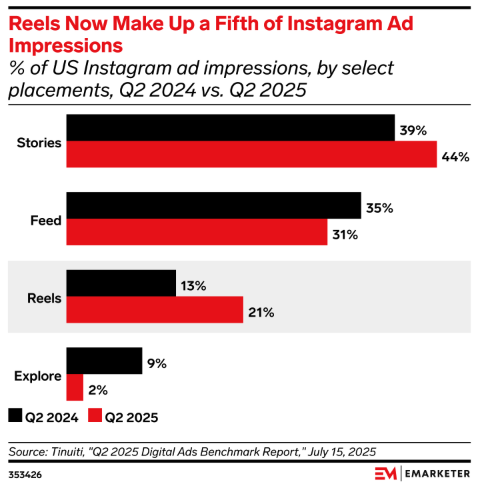
Reels (and Stories ) continue to grow their share of Instagram ad spend—not too surprising when 88% of US digital media experts rank digital video as a top investment priority for 2026, according to Integral Ad Science and YouGov.
🚨 New Podcast Alert!
New year, new bangs, a baby bump, and a whole lot of agency energy. 🎉 In this episode of The Flynn Effect, the team kicks off 2026 with honest, amusing talk about smarter onboarding, just-enough process, AI that actually makes life easier, and bringing brand personality to life—from the office walls to the website. Plus: pop culture detours you didn’t know you needed.


