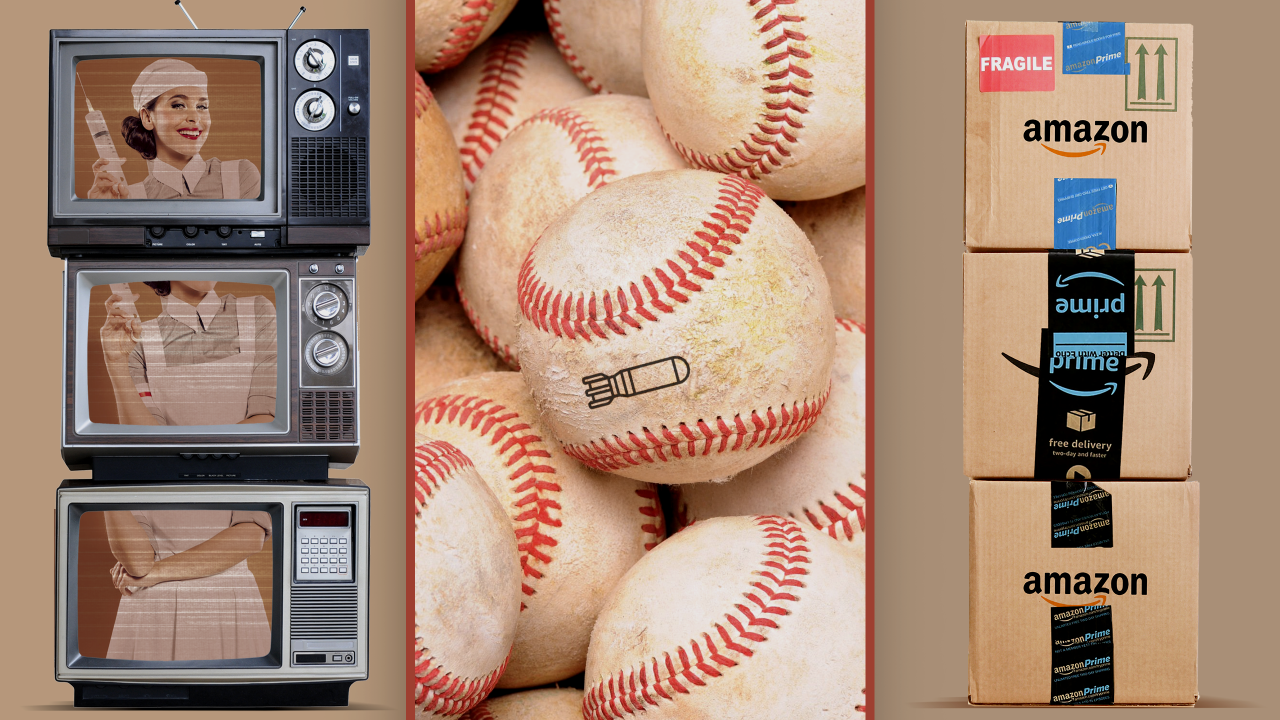
Major League Baseball’s regular season kicked off last Thursday, and we’ve already got major headlines surrounding the New York Yankees’ use of “torpedo bats.” The bat was developed by MIT physicist Aaron Leanhardt, and shifts the “sweet spot” of the bat down toward the handle.
In coming up with the design, Leanhardt said he analyzed thousands of data points related to player swings and found that players consistently made more contact closer to the handle. Enter the torpedo bat. In their opening series, the Yankees hit 15 home runs against the Milwaukee Brewers on their way to a 3-0 start.
How does this remind us of marketing? Whether it’s baseball or advertising, teams are constantly making improvements to gain a competitive advantage. Advancements in data and analytics are leading to smarter decisions at a rapid pace. If you’re not keeping up, you’ll fall behind fast.
Marketing, just like everything else in society, never sleeps. Luckily, we’ve got the scoop.
Grab your overpriced oat milk latte and let’s dive in.
🚨 Pharma TV ads: is the end near?
Big Pharma has been the reigning champion of TV ad spend, but regulatory winds are shifting. With RFK Jr. pushing for a pharma ad ban on TV, marketers in the healthcare space might need to rethink their media strategies. If this happens, expect a mad dash to OTT, digital, influencer marketing, and content partnerships.
If TV loses its pharma cash cow, networks will scramble to fill the gap, possibly reshaping the entire ad landscape. According to Adweek, pharma spend accounts for 10-12% of total TV ad spending. If that goes away, networks may offer more aggressive pricing strategies to fill the void, opening the door for smaller brands.
On the flip side, due to regulatory differences, the potential ban could lead to significant growth in OTT as pharma brands aggressively move into the space. This could lead to price inflation and a highly competitive marketplace. For non-pharma brands, consider long-term OTT opportunities and be prepared for higher CPMs around premium inventory.
🛍️ Amazon: “Earth’s most customer-centric company”
It’s no shock that when it comes to customer experience, Amazon is at the top. Through AI, machine learning, and its obsession with convenience, Amazon has revolutionized how businesses approach customer interactions. From same-day delivery to anticipatory shipping and frictionless checkout, it keeps raising the bar. Its secret? A relentless focus on removing pain points before customers even notice them.
According to Forrester Research, by offering a seamless shopping experience, customer convenience with innovations like one-click purchasing, data-driven personalization, and responsive customer service, Amazon has achieved 20% average annual growth over the past decade.
Amazon’s CX strategies are shaping consumer expectations across the industry, meaning brands that fail to match its ease, speed, and personalization risk falling behind.
🔗 Read the full analysis on Renascence
🔍 Google Ads and search: will AI dominate paid search?
Google’s advertising and search landscape is set for major shifts in 2025, bringing significant changes that marketers need to prepare for:
- AI-Generated Search Results – Traditional SEO strategies will be disrupted as AI-powered answers replace traditional search rankings, requiring brands to rethink their content approach.
- Decline of Third-Party Cookies – With privacy laws tightening, marketers will need to rely more on first-party data and alternative tracking methods.
- Evolving Paid Search Ads – Expect new ad formats and placements as Google shifts to AI-driven recommendations and automation.
- Rise of Conversational Search – Voice and chatbot-based searches will become more common, meaning brands need to optimize for natural language queries.
- Increased Competition for Ad Visibility – With Google adjusting how ads are displayed, brands may need to bid smarter and leverage AI to maintain their presence.
A few adjustments we’ve found helpful here at Flynn to maintain peace of mind:
- Adjusting for zero-click search results.Ensuring we’re not allocating high spend levels to keywords with a high percentage zero-click results. Tools like Similarweb help us navigate the challenge.
- Onboarding first-party data when possible. Not all data is created equal, but when available, we activate rich client audiences in a privacy-compliant setting.
- Leaning into AI. We’re customizing ad copy and formats with predictive scoring algorithms and continuously optimizing. Paid search, like any other channel, is not a set it and forget it activity.
That’s Cool!
We’re nearing the end of March Madness for all who celebrate. If your bracket’s busted, check out this fun activation from Pizza Hut.
Say hello to “Hutty,” Pizza Hut’s AI-driven mobile companion designed to hype up March Madness fans and help them order pizza with less effort than choosing a bracket winner. It’s gamifying engagement, and honestly, it’s a pretty smart play.
Through Instagram, Hutty leverages Meta’s AI to offer real-time reactions, hot takes, and exclusive offers. The concept came from internal research indicating that 69% of individuals watching the games on TV are also using their phones. Additionally, 64% of sports fans engage with social media during the tournament.
The idea of “second screening” is nothing new in marketing, but brands often don’t take advantage of the approach. By pairing TV or OTT campaigns with tactics like mobile display or social, brands can ensure better reach and frequency, leading to better engagement.
New Podcast Alert! 🚨
The Power of Authentic Positioning: a Conversation About Peace of Mind
Katie Flynn speaks with Mallory Diamond, Flynn’s Director of Relationship Development, about the importance of clear agency positioning. They discuss the journey of refining Flynn’s approach and how they arrived at the authentic and meaningful statement: “We help Peace of Mind Brands perform better.”
Podcast episode: The Power of Authentic Positioning: A Conversation about Peace of Mind


