Marketing is feeling extra right now—louder platforms, sharper opinions, shifting channels, mixed with a bit of “wait, are we still doing this?” This week’s roundup tackles what’s actually changing (and what’s just noise), from media bets and brand risk to where audiences are paying attention—and where they’re absolutely not.
Grab an energy drink and let’s dive in.
🤖 From Experiments to Hard Bets: The AI Shift in Marketing
AI is quickly moving into “this is how marketing actually runs now” territory. After talking to hundreds of CMOs and their teams, Shiv Singh has found a loud and consistent message: AI isn’t a tool upgrade—it’s an operating model reset. Here are a few key takeaways for the TL;DR crowd that doesn’t have time for all 10 of the trends he identified:
- Redefine human value—fast. AI agents can now plan, draft, test, and optimize at machine speed. Your job is no longer execution; it’s judgment, taste, strategy, and ethics. If your role can’t clearly articulate its human edge, it’s on borrowed time.
- Stop “AI stacking” and start system thinking. More tools won’t save you. Connected, agentic workflows will. Winning teams run marketing like a control room, not a relay race.
- Prepare for search to betray you. AI answers are killing clicks. The new goal isn’t ranking—it’s being the source models trust and cite. Authority wins.
- Assume ethical risk is now your problem. As AI feels more human, marketing becomes the front line for trust, transparency, and monetization backlash. Congrats?
- Creativity isn’t dead—premium pricing is. AI makes “good enough” free. Scarcity (and higher value) now lives in taste, restraint, and cultural relevance.
- Make fewer bets, but make them count. Endless pilots are out. CMOs will be forced into sharper, riskier strategic calls—and quickly.
The bottom line: AI is raising expectations while removing excuses. Marketers who adapt their mindset—not just their stack—will thrive. Everyone else will wonder when the ground disappeared beneath them.
🗣️ Comment Sections Are Not Customers—Lessons for Navigating Controversy
Every few months, a brand reminds us: the internet may be loud, but customers ultimately vote with their wallets. American Eagle may be a recent example, but the real story is about what happens when they and other brands start treating backlash as a variable, not a verdict—when they learn to live with controversy, not automatically sprint away from it.
Key takeaways for marketers:
- Social outrage ≠ market reality. Online criticism can feel overwhelming, but it rarely mirrors actual buying behavior. Your loudest critics are not always your core customers.
- Consistency beats whiplash. Pulling campaigns at the first sign of discomfort trains audiences to expect reversals. Standing by decisions (thoughtfully) builds a clearer brand identity.
- Risk is now table stakes. In a hyper-reactive culture, playing it perfectly safe often means being forgettable. Some level of blowback is the cost of being visible.
- Strategy > temperature checks. Smart partnerships and creative choices should ladder back to long-term brand goals, not the mood of that day.
- Silence can be a tactic. Not every controversy needs a megaphone response. Sometimes the most confident move is to stay focused on the business.
So remember: know who you’re for, be clear about what you stand for, and don’t confuse noise with impact. The brands that win aren’t controversy-proof—they’re conviction-driven.
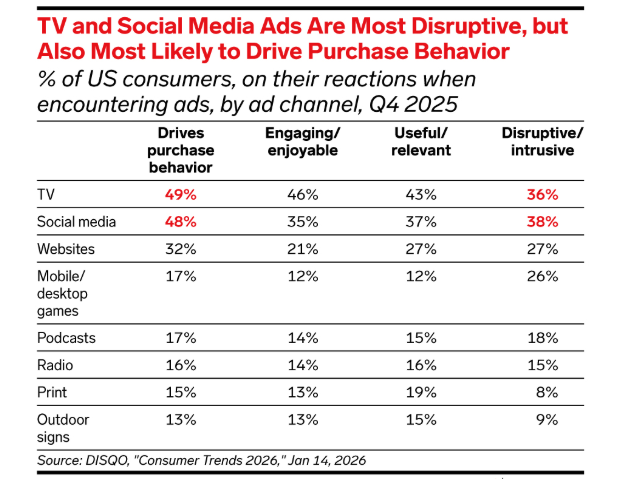
📺 Video Advertising’s Double-Edged Sword
🔊 Is It Time To Turn Up Audio Ads?
Digital audio is making noise—and that’s not just your AirPods talking. Podcasts and streaming audio are turning up the volume as more marketers test, learn, and (slowly but surely) shift real dollars into the channel. With nearly $1B in new podcast ad spend projected by 2029 and most advertisers still early in their audio journey, digital audio feels less like a “nice-to-have” and more like a “why aren’t we doing more here?”
The big takeaways (and what to do about them):
- Audio is no longer just upper-funnel wallpaper. Yes, brand awareness still leads the charge, but a growing chunk of advertisers are using digital audio to drive traffic and conversions. Translation: stop treating audio like a vibe-only channel.
- Budgets are small—but growing. Most brands are testing with 1–10% of spend. That’s a signal to experiment now, before the space gets crowded and pricey.
- Context matters more than ever. Commuting and at-home listening dominate, meaning ads hit when audiences are focused, hands-busy, and (ideally) less scroll-happy.
- Measurement is the buzzkill—until it isn’t. ROI confusion is the top barrier, but better attribution and full-funnel measurement tools are starting to close that gap.
Long-story short: digital audio is moving from “interesting test” to “serious contender.” Marketers who crack the measurement question and integrate audio into full-funnel strategy now will sound a lot smarter later.
🔗See more and get the full report at EMARKETER
🚨 New Podcast Alert!
Is social media broken, brilliant, or just…very AI right now? In this episode, Katie Flynn talks with Flynn Integrated Media Strategist Ashley Rieflin on the 2026 state of social—from AI trust issues and TikTok-as-search to Threads fatigue, influencer myths, and why creative now runs the algorithm.


