In this episode of The Flynn Effect, host Katie Flynn sits down with longtime Flynn creative Brad Garratt to explore his concepting process, the balance between speed and creativity, and how enduring taglines like “Every Season Starts at Dick’s” come to life. Brad shares how he feeds his subconscious with research, pop culture, and insight to fuel strong ideas—and why giving those ideas space to breathe is more critical than ever in a fast-paced creative world.
View Transcript
Katie Flynn: in, I guess. Welcome to season two of The Flynn Effect. Season one was in 25. We are in 26.
Brad Garratt: Oh, it’s an honor then. Especially a large honor.
Katie Flynn: Brad Garrett, creative supervisor, copywriter by trade, flinner of 25 years, so I guess. So 25 years ago, was it Martino Flynn, then Flynn? All right. You’ve been around the block.
Brad Garratt: Yep, I got the silver watch for 25 years.
Katie Flynn: Oh, beautiful. No, you didn’t. Because I was the one who gave you the gifts. All right, I want to talk a little bit today about concepting and your process around that, and just a few other things based on the things that you have done here over the years, some historic campaigns perhaps that we cite again and again.
Brad Garratt: I think I know where you’re going with that.
Katie Flynn: Yes, I’m sure you do. But start, I guess, on that concepting side of things, like can you walk us through, for those that are curious, a little bit of what that process looks like? Where do you start? Where does your brain take you? Do you consume a bunch of media and do research? What is it like?
Brad Garratt: Yeah, if I have time, which we don’t always have as much as we’d like, but ideally, yeah, I start and I try and ingest as much as possible. I try and get as much in my head as possible, reading whatever the account teams come up with, stuff on my own. like to immerse myself as much as possible and really kind of just have it be part of the atmosphere. Because what I’ve found is if you can kind of let everything be in there roaming around, there has been a few times, including part of something we’ll probably discuss later, where you get the idea comes to you because your subconscious is working on it. And I think you really– that’s more likely to happen if you just got so much in there, you’ve kind of obsessed about something. And then, again, time allowing, let it breathe a little bit. Let your subconscious mind work on it. And often, self will just seemingly miraculously come to you, which isn’t really a miracle. It’s because another part of your brain’s been working.
Katie Flynn: No, I think that makes total sense. That’s what people always say, you get this brilliant idea in the shower. And it’s like you give yourself a break from staring at your computer screen and actively trying to come up with a thing. And sometimes it just hits you. Now, you’ve mentioned this a couple of times, if time allows. I would imagine time has allowed less in recent years than it did 25 years ago because it seems like timelines get faster and faster. Is that challenging?
Brad Garratt: Certainly, yeah, because that is the ideal. And certainly, we get that, especially for kind of larger projects. But yes, often now, stuff has to turn around more quickly. I think there’s a little of the same thing in that– the good thing is, especially if it’s a long-term client, a lot of that stuff’s already in there. So you can still do a part of that process. Your subconscious, again, can still work a little bit just because you have all that stuff in there. But again, even that, it’s always good to be able to take a little break and not have to go full out beginning to end, although sometimes we have to do that. But yeah, even just brief pauses, switching to another project, another client, going for a walk, whatever, can certainly help with that.
Katie Flynn: Yeah, that makes total sense. And in terms of the research and the reading that you do– and I would imagine sometimes that’s consuming traditional media like TV and movies and those things, too, that will just keep you kind of relevant there. make a concerted effort with that? Do you have sources that you go to again and again? Or is it just more like you stay a bit up on pop culture and what’s going on? Because I would say you are very relevant in that way. You make very timely jokes in our team chats.
Brad Garratt: Yeah, well, it is somewhat conscious. And frankly, partly, because as I get older, you want to not be totally left behind. Again, I’m never going to pretend like I’m Gen Z or something. That would be uncomfortable for everyone. But yeah, kind of having a general sense so that when you have to communicate, especially to a broader audience, you can be somewhat relevant. Again, you don’t want to make something so trendy or something that six people are going to get. But I think you need to kind of be generally up to date on what’s going on. And again, yeah, I think it all feeds in. And I think I’ve had ideas just like all of us when you’ve seen something in a movie or in a TV show or now social media in your feed. And it does make you think of something else. You go, oh, what if we did this? So yeah, I think all that’s real important.
Katie Flynn: And for people who are starting out like in a copy or a creative field, do you think that’s a big part of the job now? Is that part of the responsibility? You’ve got to stay current. It’s not just about the ability to write well.
Brad Garratt: Yeah, yeah, definitely. I think there’s some eternal truths that people have a way they want to be perceived. They want to stay connected to people. They want to be valued. They want to have a trajectory of improvement and growth. All those things I think are universal and timeless. But we all live within this world and what’s going on now. So I think connecting those things is important. And that way, it also helps no matter– again, we switch tracks on which client, which project you’re working on. And so again, having that base knowledge, I think, helps no matter what you’re working on.
Katie Flynn: Yeah, I love it. Well, all right, we’ve already alluded to the one campaign that I want to bring up. And the only reason I giggle about it is because every time I put you as a team member in a pitch deck or something like that, I bring it up every time it’s always written in there. And that is the fact that I believe you were the writer or a lead on the team that wrote Every Season Starts at Dicks for none other than Dicks Sporting Goods. Can you tell us a little bit about– how did that come about?
Brad Garratt: Well, it was part of a rebranding at the time. Again, they’ve grown even more so. They grew a lot before I came to Flynn. But this was another kind of big cross the company rebranding. And I should have gone back and looked because it wasn’t the only– there was at least one other idea that was real close. They were neck and neck. That’s obviously the one that went out and has lived on. But I do remember, as I alluded to earlier, when we executed that with the TV spots, we did the idea, Every Season Starts at Dicks. And so the idea and execution was before you do this or that, and we ended up running the film backwards, which was just something different. And that’s where I remember I was– I remember I was pushing my probably middle daughter in a stroller. And I can even remember where I was on my street when it just– the reverse idea popped into my head. And that’s the kind of thing that out because you feel like the muse has visited you, which is maybe a little grandiose.
Katie Flynn: No, I love it. And I mean, it just goes to show that not every great idea is just going to happen while you’re at your desk waiting for it to happen. Sometimes it needs to happen while life happens.
Brad Garratt: Yep. I don’t know if artist is quite the word for what we on the creative team do, but there is an art to it. And I think– Sure. Yeah, it isn’t like solving a mathematical equation. There is a strange– I don’t know if it’s spiritual or an aspect of it that, in some ways, you can’t force. You can create the environment where it’s more likely to happen. But yeah, again, if you can have that time, that freedom to kind of let things just percolate and bubble, that definitely helps.
Katie Flynn: Well, I would imagine that’s a meaningful job to have worked on just because it has endured for such a long time. And it’s such a recognizable brand. But anything else stick out in your tenure that you’re like, this was a special one for me that I really liked. Whether or not it was chosen to actually move forward.
Brad Garratt: Well, another– again, it’s not all about tag lines. But I remember– and this is in some ways a silly thing. But I remember seeing it embroidered on a shirt, which made me very happy. It was for our client Cooper Vision at the time. And the line was “See Beyond the Ordinary.” And I remember that one. That was a fun one.
Katie Flynn: Yeah, I would imagine seeing your work in the wild is fun. Even now, when we’re watching Sunday football and spots come up for some of the clients that we have, created those spots and bought the media, I recognize it. My husband recognizes it. It’s just like it’s a fun, special moment.
Brad Garratt: Yeah. It’s not movies or TV. But in some ways, it is entertainment-adjacent, especially television. You are next to an NFL football game. You are a part of it in a way, the presentation of it. And that– yeah. Certainly, the 100th time you see the same spot. Never gets old. But I will say still, even the first time you see something on TV especially, that is a feeling that I still enjoy, again, many, many, many years later.
Katie Flynn: Awesome. Well, all right, last thing I got for you. You are the people, the listeners, probably don’t know this, the procurer of our newsletter now and writer extraordinaire. So I would imagine you have been consuming quite a few newsletters, because that’s the way we do it, is a little bit of a roundup and tell people what we think is important for them to know. Any big predictions for 26? What do you think is going to be the thing people talk about most?
Brad Garratt: Well, you know what I’m going to say.
Katie Flynn: Is it AI?
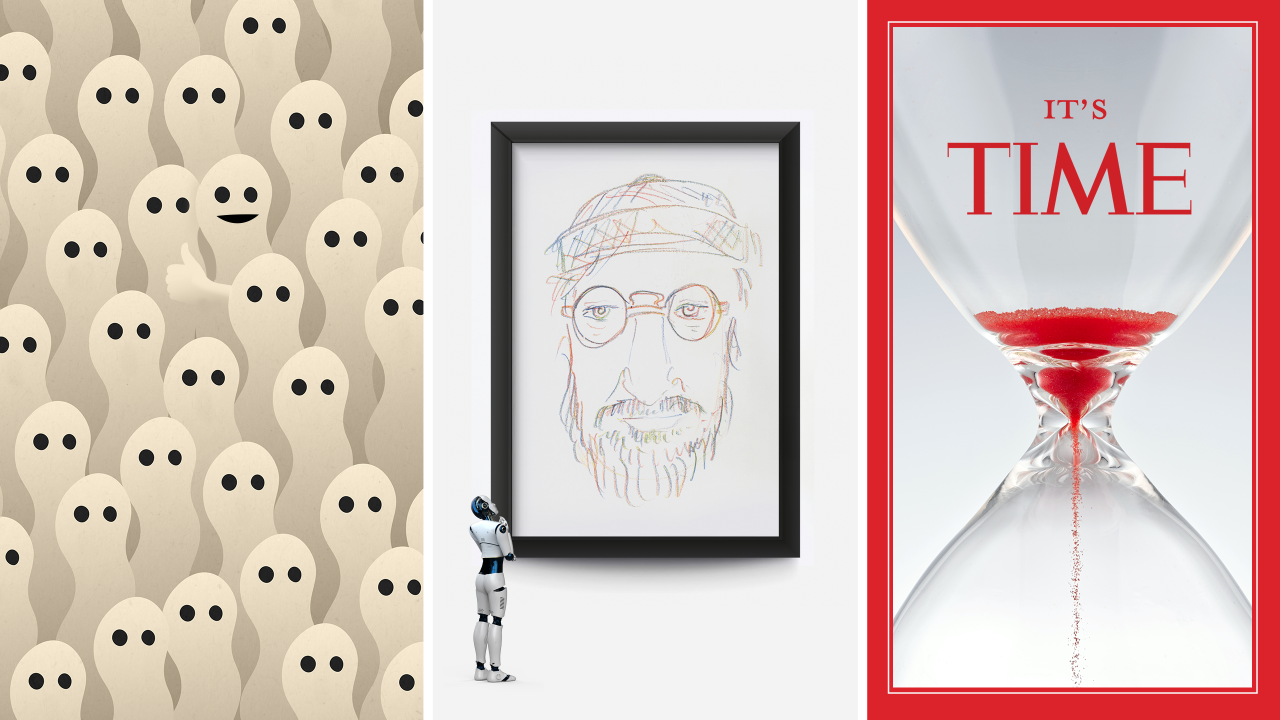
Brad Garratt: It just may. Although I’ve seen even, I think other people are getting tired of that. I’ve seen more and more use of LLM instead of AI, just because I think in some ways maybe we tune that off, tune that out, I should say. But yeah, I would think obviously that’s only going to continue to grow both in what we use to help create things in terms of insights. I know in media, digital media, especially, AI is playing more and more of a role of what gets served when. So the easy and most certain answer is it’ll be AI related. Although again, especially in this world, we’re in January by December. I don’t think anybody would put a huge amount of money on knowing exactly what it will be. That’s just the world we live in now.
Katie Flynn: I totally agree. And I do think the last two years, pretty much it’s been– if you were to just put all the headlines into something and say, make a word cloud, I would imagine AI would be the biggest word by far.
Brad Garratt: I will say– and it is AI related, but in some ways, I think already you see a bit of a backlash towards AI as far as things that are being created to be more human created. So I think that’ll probably ebb and flow. But I think already we’re seeing more and more of that, is things that are definitely handcrafted or definitely more human involved. Even with their little flaws and everything, I think that’s only going to probably increase in value just because there’s no question it’s harder. So I think people appreciate people taking the time to create stuff too.
Katie Flynn: And I think we are hitting a point where people are starting to tune out a little bit of like, I don’t have time to read another newsletter on what changed in AI today. Because it is so rapidly changing that people are probably going to have to diversify the content that goes out there a bit too.
Brad Garratt: Yeah, I know that we try and do that. It’s hard. But yeah, and in some ways, I think there’s fatigue. It’s almost like, well, I could read this about this today, but this could change by next week. So that’s definitely a danger.
Katie Flynn: All